Monday, October 9, 2017

ISTE Standards for Educators: The Learner


ISTE Standards for Educators: The Learner (source: https://www.iste.org/standards/for-educators)

Educators continually improve their practice by learning from and with others and exploring proven and promising practices that leverage technology to improve student learning. Educators:

Ø  1a Set professional learning goals to explore and apply pedagogical approaches made possible by technology and reflect on their effectiveness.

Ø  1b Pursue professional interests by creating and actively participating in local and global learning networks.

Ø  1c Stay current with research that supports improved student learning outcomes, including findings from the learning sciences.

1a Setting Professional Goals

Educators should model a life-long learner standard. Part of this is setting educational goals. Teachers should set new goals each year. If you are not sure where to start, reading is always a good place. Reading new material can lead to improving current classroom practices and inspire one to try new things, and it is a great place to start with setting new goals.

Read everything you have time for related to your educational discipline. This can include blogs and wikis but also research. If you have more time, read material related to other educational disciplines to stretch yourself. If you are an elementary math teacher, learning more complex mathematical concepts may inspire how you teach the basics. Also, read about educational standards and practices in other countries.

Finally, decide what is most important to you this year. The article “Goal-Setting for Teacher: 8 Paths to Self-Improvement” at cultofpedagogy.com provide some good starting points.

1b Professional Learning Networks (PLNs)

When you consider a PLN, think not just what you can get from it but what you have to offer. If you are an experienced teacher, you have a great deal to share and you can help mentor less experienced teachers.  Teachers love to teach, right? What better way is there than to share all that you have learned through your joys and struggles to help others become better teachers themselves?

If you are a member of ISTE, you probably are already aware of the PLNs available through the organization. That is a wonderful place to start. Periodically, you want to revisit the Learning Networks page to see what is new and what meets your needs in the place you currently are. The key to meeting the ISTE Learn standard requires more than just membership; it requires meaningful participation. If online PLN’s are not what works for you, consider joining or starting one at your school or campus. You can invite educators in your school and neighboring schools.

1c Stay Current with Research

If you have been reading to set your goals for the year, you already have this one covered. Choosing what research to read can be an overwhelming task. I recommend not going it alone. One thing you might do is ask members of your PLN to read different sources and then come together to share what you have learned. You can do this face-to-face or using a blog or wiki. If you are someone who prefers to work alone, limit your research choices to one specific area at a time. Read the abstracts carefully so you know if a research study is right for you. Finally, if you do not have the time to read a whole article or study, read just the introduction and the conclusions.

Perhaps your professional goal for this year will be to become more active in a PLN, or even start one so that you can stay current with best practices in your field of education.

 Resources:

·         The Library of Congress Research Tools at loc.gov
·         ISTE Professional Learning Networks at iste.org
·         Education PLNs on Pinterest
·         Goal-Setting for Teacher: 8 Paths to Self-Improvement at cultofpedagogy.com

Tuesday, March 14, 2017

My Dream Education System

I Have a Dream

I dream that one day all classrooms will be filled with enthusiastic students actively engaged in the learning process; students who want to be present because they are receiving a value-added education. Active engagement is paramount to a successful classroom atmosphere because learning is not a spectator sport. 

For many years I have been analyzing research on best practices in education. I have also read about schools that have stepped outside of the box and taken a chance, putting students and student learning first instead of teacher achievement and test scores. An interesting outcome of these programs is that student test scores were higher than national averages, even without any time spent in test preparation.

Needham (2010) found “the use of problem-based learning can increase standardized test scores at least as much as traditional teaching methods.”[1] For the past 20 years the New Tech Network has been using a school-wide project-based learning model.[2] Outcomes of this model included graduation and college admissions rates that were higher than the national averages. New Tech Network research also demonstrated that graduates develop strong critical thinking skills. Gallagher and Gallagher (2013) found that quality project-based learning activities increase student engagement and, as a result, student achievement.[3]

I envision an amazing education system where all students could receive a value-added education; a student-centered atmosphere where teachers excite and facilitate student learning. I envision an environment where students are engaged, learning content offered in a design that best meets each individual learner’s needs.

Learning Styles

Early learners should be grouped by personal learning style and provided an instructor who excels in teaching to that learning style. While conflict still exists in the research on the topic of the impact learning styles have on student learning outcomes, there is no shortage of research on the topic of student learning styles and academic achievement, as well as the potential impact of learning styles on student dropout and incarceration rates.[4] As someone with a doctorate in education and many years of teaching experience, I am convinced that learning styles impact student learning outcomes; students perform better when their personal learning styles are considered and utilized.

I recall a statistic on learning styles I heard mentioned in a course I attended at Bloomsburg University; while 80% of all teachers are auditory learners only 20% of students are auditory learners. Because so many of us teach the way we learn, this may cause 80% of the students who are not auditory learners to have difficulty learning from 80% of the their teachers. It would be beneficial to students if teacher education programs included methods of identifying and teaching to the varied learning styles.

I also know that addressing learning styles impacts learning outcomes because I am one of the 20% of teachers who is not an auditory learner. I am a kinesthetic learner. I have tried to learn from auditory-only material and failed miserably. One example was a course in Italian on cassette tape that I attempted before my trip to Italy. I learned nothing from it. In fact, I became highly agitated in attempting to learn listening to the tapes. During college classes, I often stood in the back of the room so I could have the opportunity to move around; moving helps me to absorb and comprehend new material. High school was more of a challenge but I fidgeted a lot and filled my notebook with intricate doodles in order to keep my mind focused on instruction.

I also want to make a point about elementary math instruction. Many of our young people have math anxiety and believe that even a simple mathematical concept, such as calculating a percentage, is a difficult thing. Seymour Papert wrote about the importance of elementary school teachers comprehending deeper mathematical concepts.[5]  This is even more of an issue for teachers who must now follow the Common Core in their lesson planning. [6]

Papert also researched the impact of project-based learning on mathematics instruction.[7] Math needs to be taught in a hands-on, applied sense, not a theoretical sense. For example, instead of having students solving for some random variable X, why not teach them to calculate how many boxes of flooring tiles would be needed for a kitchen remodel? In physical class, students might design a skate park with ramps and rails.

I dream of classrooms, grades K-2, where students are grouped by learning style so that all students can learn the fundamentals in a way that best meets their needs; a K-12 curriculum model the truly meets the needs of all learners. Since the lessons will be presented according to methods that meet their needs, student may be able to accomplish more academically during these formative years. Additionally, before students advance to higher grades, they will receive instruction and practice to prepare them to learn in settings that do not cater to their personal learning style. I hypothesize stronger social skills will be developed as an additional result of the reduction in stress afforded by this type of learning environment.

Strength-based Learning

There is no shortage of quality research that demonstrates the positive outcomes of a strength-based education.[8] For some reason, those that administer the education system in the United States have decided to punish students for their weaknesses rather than focusing on individual strengths. This frustrated me quite a bit as I raised my children. My daughter struggled with mathematics, so she was enrolled in math course after math course. She was required to take the 4Sight math exam so many times she memorized it! And what did she learn? She learned that her teachers did not care if she learned anything; they demanded that she improve her score on a test that would have no impact on her life! I know that she would have gained much more from her K-12 education if she had been allowed to develop her strengths.

After the early grades, students should be grouped with like-minded peers who can help them to excel. For example, students with a strong interest and/or aptitude in music may work with others who have a strong interest and/or aptitude in music. All students would still be given instructions in all educational areas, but within an atmosphere that more closely aligns to their personal strengths.  For example, the study of mathematics can be incorporated in an almost infinite number of ways within the study of music. Volume, tone and tempo all have mathematical implications. Students will have the opportunity to independently (or with a group) solve problems, find solutions, and develop critical thinking skills.

I dream of classrooms where students are encouraged to do what they are good at and what they enjoy. Imagine what students could accomplish if their education was focused on individual strengths. Imagine the outcomes when students with strong science aptitudes are allowed to experiment together. Picture what may happen if those who prefer to work alone were given the time and space to do this instead of being placed into group work where they may be slowed down. Imagine a classroom where the teacher can help students develop their individual skills and abilities instead of feeling they must teach to the lowest-ability students in the classroom. An excited teacher excites his/her students!

Stop Teaching When it is Time

We currently have a compulsory education system in the United States that requires children to stay in school until a specific age, set by state law. Compulsory education ages range from 16 to 18. Public schools are required by state law to permit students to attend classes until their 21st birthday. The taxpayers are responsible for the educational funding. From what I have seen, there are some shortcomings to this system.

Because students are required to be in school, education is an entitlement. There is no incentive for attendance or participation other than what is intrinsic to the student or mandated by a parent or guardian. I was very surprised when I learned that even the most accomplished students in my classroom do not comprehend the value of learning. They understand the value of grades and the value of a diploma, but that is where it stops. This may be in part because they received little incentive to learn; the focus is almost always on grades and test scores. But I believe a large contributor to the problem is the compulsory education system.

Mandatory schooling does not need to continue through grade 12. For many of our students, a 9th grade education is sufficient. I have worked with hundreds of students who know what they want to do with their life and know that a college education is not necessary to accomplish their goals. I would never say there is no benefit to a college education, but it is clearly not for everyone. So those who know they will not go to college are frustrated that they must go to school every day and receive an education that they perceive does not benefit them personally.

What I propose is a compulsory education system that continues through grade 9. Students who would like to continue through grade 12 can either pay tuition or compete for state-sponsored or private scholarships. Scholarships might be granted according to class rank, project-based assessments, teacher recommendations, or some other criteria as determined by each school district and/or state government. This would provide an incentive to do well because attendance in grades 9 through 12 would no longer be an entitlement but something to be earned through hard work. For those who do not wish to continue past the 9th grade, vocational training could be made available on the same basis; either students pay tuition or they compete for public and private scholarship money.

There are already public and private schools offering high school student internship programs. The Southwest Oregon Area Health Education Center has a high school internship program.[9] Fairview High School in Boulder, CO offers a variety of internships and provides an opportunity for students to create a customized learning opportunity.[10] The New York City Department of Education has year-round internship programs.[11] All of these these programs could be expanded on.

I dream of a school where all students want to attend and comprehend the value in learning. If education were considered a privilege, not a right, it would have more meaning to our students. They might even look forward to classes as some of us did our college studies. Fewer students might be left feeling imprisoned and as if they are wasting their time. I envision classrooms where students are rewarded for learning and have the opportunity to use what they learn for the greater good of the community, not for grades and test scores

Thank you for listening.


[1]Comparison of standardized test scores from traditional classrooms and those using problem-based learning http://citeseerx.ist.psu.edu/viewdoc/download?doi=10.1.1.921.9693&rep=rep1&type=pdf
[3]Using problem-based learning to explore unseen academic potential http://docs.lib.purdue.edu/ijpbl/vol7/iss1/9/
[5]Papert, S. (1980). Mindstorms: Children, computers, and powerful ideas. New York: Basic Books.
[6]Elementary school teachers struggle withCommon Core math standards http://hechingerreport.org/elementary-school-teachers-struggle-with-common-core-math-standards/
[8]White, M., & Waters, L. E. (2014). A case study of ‘The Good School:’ Examples of the use of Peterson’s strengths-based approach with students. The Journal of Positive Psychology,. doi:10.1080/17439760.2014.920408. http://www.tandfonline.com/doi/abs/10.1080/17439760.2014.920408
[9]High School Internship Program (HSIP) http://www.healthyoregon.com/programs/hsip

Tuesday, December 20, 2016

There is so much more to "giving."

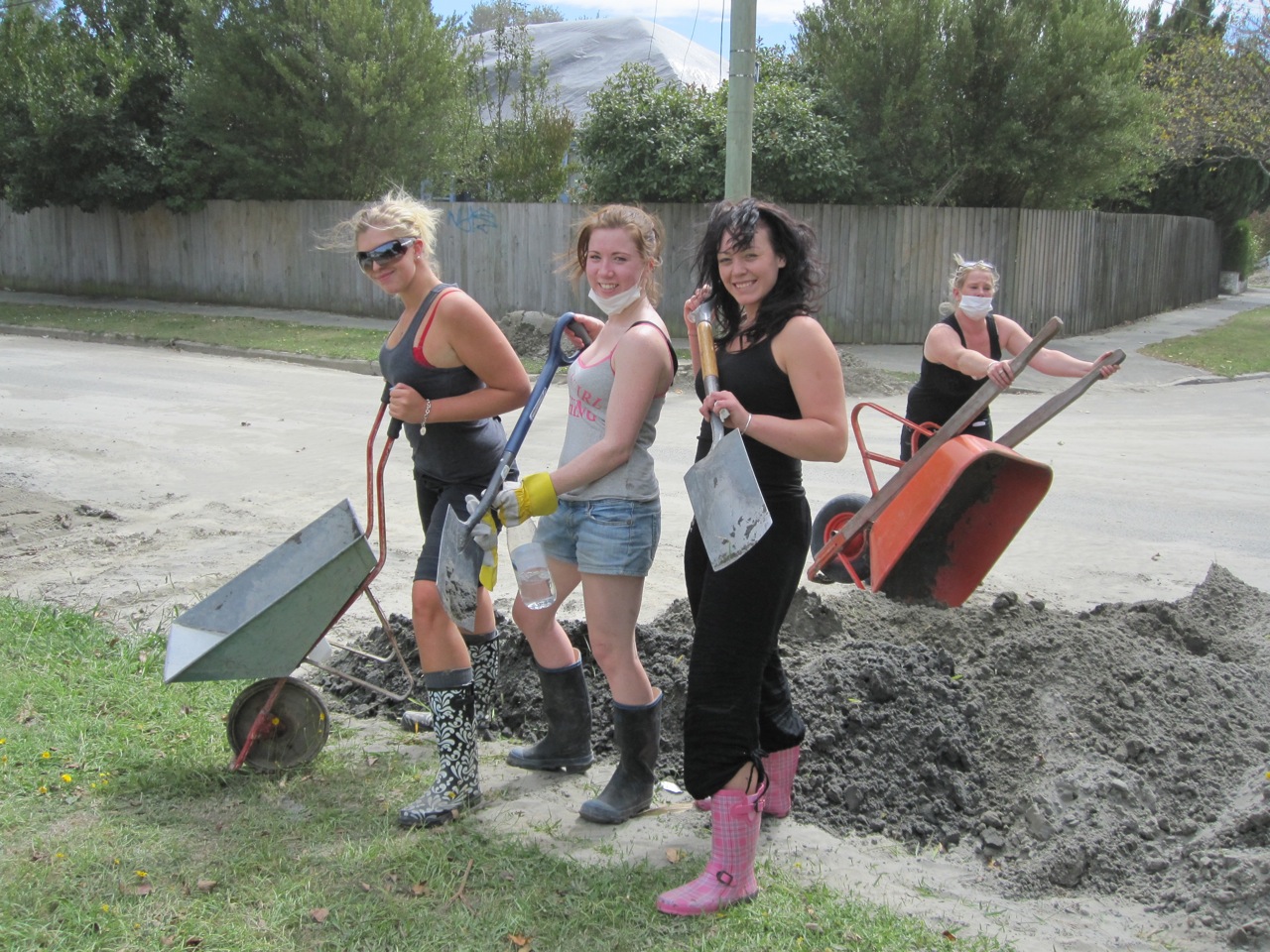
During the holiday season many of us do a lot more "giving." We make donations, volunteer to serve Thanksgiving dinner at a homeless shelter, bake cookies for friends and family, and find so many other opportunities to give of ourselves. Where did we learn to do this? Most of us learned through our friends and family. Yet, years ago the whole community was involved. It used to be expected that you would contribute not just to your family but to the community at large.

I recently saw a Hallmark Channel movie that featured a Santa Clause who had a different perspective. Instead of just asking the children what they wanted for Christmas (shouldn't Santa know that already?) he asked the children what they would like to give. He opened the children's eye to what gifts they had that could be shared; no money or shopping necessary. 

Image result for student volunteer
Our students spend 13 years in public (or private) education hearing only about what they may "get" from it. You need to do well in grade school to "get" into high school. Do well in high school and you can "get" into a good college, "get" scholarship money and grants, and so on. Earn a college degree so you can "get" a good job so you can "get" stuff. I believe it would greatly strengthen the education system, and our society, if we focused more on what students can "give."


Image result for student volunteer
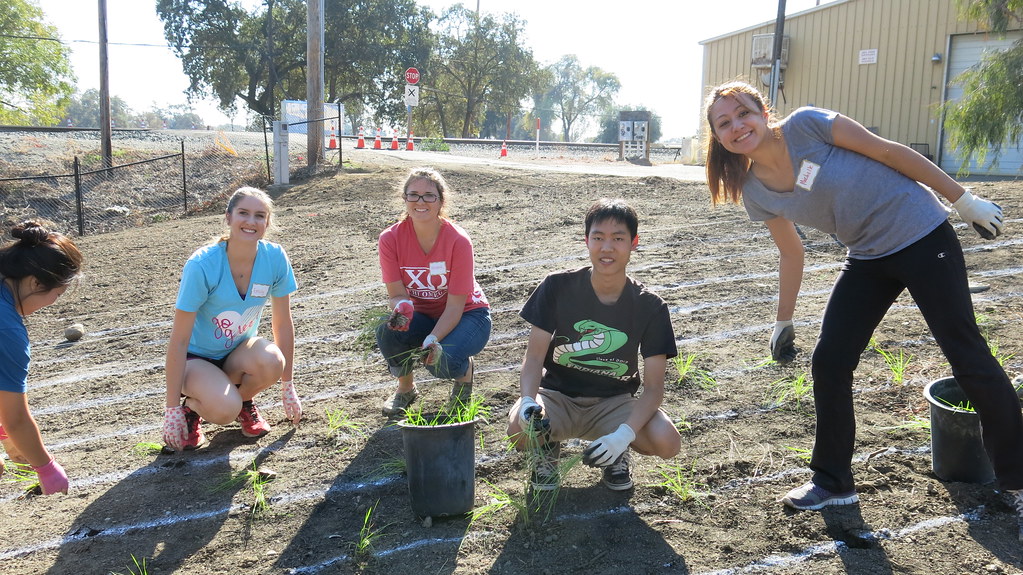
Some simple gifts a child can give to a loved one include helping with dinner or household chores, a Free Hug coupon, singing a song or presenting a dance routine. Some gifts our students can give to the school community include peer tutoring, helping to clean up around the school, starting a flower garden, making gifts for those who are less fortunate, and fundraising. Some gifts our students can give to the community are joining a service organization like the 4H Club or the national scouting organizations, volunteering at a local hospital, picking up trash on the side of the road, or helping a neighbor with yard work or babysitting.

Our students have so much to offer and yet without the example being set for them it never occurs to many that they should be expected to give and not just to receive. I know many of you would agree there is often much more joy in giving than in receiving. One of my students is so excited that he was able to buy gifts for his family for the first time this season. He is spending money that he earned through hard work. He says that he is so anxious to give the gifts he is having a difficult time waiting until Christmas! This young man has learned the joy of giving.

The well-known psychologist, Erich Fromm, wrote:

“Giving is the highest expression of potency. In the very act of giving, I experience my strength, my wealth, my power. This experience of heightened vitality and potency fills me with joy. I experience myself as overflowing, spending, alive, hence as joyous. Giving is more joyous than receiving, not because it is a deprivation, but because in the act of giving lies the expression of my aliveness.”
  
I found a number of Websites that list opportunities and resources for young people. Here are a few of them.

As we move into the New Year, perhaps we can keep these things in mind and look for opportunities for our students to give of themselves and to share their gifts and talents with others so that they might experience this joy.

Image result for student volunteer

Thank you for listening.


Thursday, December 8, 2016

Preparing for the Holidays


Preparing for the Holidays


The holiday season brings a great deal of excitement to the classroom. Most students are anticipating how they will spend their break and what gifts they might get. They are excited about spending time with family. Unfortunately, this is not the case of all of our students. Some children do not have celebrations during the holidays because of cultural or religious differences. There are also a number of young people who struggle emotionally during this period of time.

Many children, particularly those with autism, do not respond well to change. Staying home from school for winter break is a complete disruption of their daily routine and can generate a great deal of anxiety and stress. According to U.S. Census Bureau, in 2015 there were 49,361,000 students were enrolled in K-12 schools. We know that about 1 in 68 has autism; that means there were about 725,900 autistic students. 

Other children do not look forward to long breaks because they do not have a happy home life. Some are homeless, in foster care, come from abusive homes, and/or live below the poverty level. These children do not have the same expectations their classmates do of expensive gifts and fancy meals.
Other young people are struggling because they have lost a parent either through divorce or through death. The holidays can be a challenging time for young people who have suffered a loss, especially those who find it difficult to express their feelings. Some may experience feelings of guilt, particularly in family where a divorce has occurred.

So, I'm not writing this to be a Debbie Downer. I think it is important as educators that we are aware that some of our students may not be looking forward to winter break. We need to be sensitive to students who might be having a difficult time this holiday season. Here are some suggestions.
  1. Try to provide opportunities for students to open up and share their feelings about the holidays.
  2. Provide alternate assignments if you are doing some holiday-related activity. Be creative. For example, if you assign students the task of writing about how their family spends the holidays, you could offer students the option of writing about their dream vacation or perhaps how they envision the perfect holiday to be. If children are making a craft to give to a parent as a holiday gift, you might offer the option of making a gift for a friend or even for themselves. If a child lost a parent or another loved one, you might suggest that they make something to honor that person.
  3. Some schools have little holiday shops that are open for children to buy gifts for their families. Come up with a fun alternative activity for students who cannot, or just do not want to shop. That way those who have little or no money, or have no one to buy for, will not feel left out.
  4. If you think a child is struggling, keep in touch with other teachers and guidance counselors in your building who see the same student. Find out how they are doing in their other classes.
Keeping all of our students in mind when planning holiday activities may lead to a more positive learning environment, help struggling students cope, and still offer a nice distraction from the everyday for everyone.

Thank you for listening.


Tuesday, November 15, 2016

Politics in the Classroom – The Aftermath

I had hoped that November 9, 2016 would bring some relief from politics and the political election. Alas, it was not meant to be. Instead, November 9 brought a tidal wave of emotion. I have four simple words to bring peace to my students; politics is not personal.

Of course, we all feel a personal connection. We looked at the candidates and made connections; formed opinions. We hoped and perhaps even expected a certain outcome from the November 8 process. Yet, it is not personal.

A new U.S. President does not change what this country is and what it stands for. There are still millions all over the world who are trying to get into the United Stated because of the hope, even promise of a better life. I recently heard an interview with a Haitian woman who spent four years of her life to get to Mexico so she could cross the northern border.

Our country still has three branches of government for checks and balances of power. We, as a people, still have the freedom to reach out to our elected officials and share our opinions. Many countries do not offer this freedom. We still have the right to practice whatever religion we choose openly. Again, many countries do not offer this freedom. There are countries where people must practice their religion and even their sexuality in secret or fear for their lives.

I blame the media for all of the drama we are experiencing. The media thrives on drama because drama sells. Hillary is a hard working public servant who has spent most of her adult life in service to this county is not a sexy story. The media would rather focus on her mistakes. Donald is an accomplished businessman who has created thousands of jobs and helped thousands more through charitable contributions is not as enticing to the media as some trash talking Donald did years ago.

I was raised to separate the Office of the President from the person. I am hoping that the people of the United States will be able to do this going forward. Ignore the media. They are not your friend, nor do they have your best interest at heart. The interest of the media is making a profit for themselves. Instead, take a deep breath and let us watch and see together. The election is over so lamenting its outcome will come to no avail. Perhaps there are great things coming in the next four years. And if not, we know there will be another election. If you are unhappy now, perhaps you will like the outcome of that one better.


Thank you for listening.

Friday, November 4, 2016

Politics in the Classroom

 
When voting is depressing.

Politics may not be the best subject for an educational blog, but I need to get this off of my chest.

I teach a Personal Finance course to high school seniors. We have been talking a great deal about the upcoming election. One of the topics I cover in Personal Finance is what I call "Taxpayer Responsibility." In this unit, I teach my students how to vote. I explain the difference between a U.S. Representative and a PA Representative. I show them how to use resources such as govtrack.us to look up the activities of elected officials. I also have them take the political quiz at iSideWith to see how they align with the political ideologies of the candidates. As we are discussing this and other topics, the current U.S. political environment has come up a number of times.

The issue I find most troubling is that these young people want to be excited about voting, but instead of being enthusiastic about casting their ballots they are disappointed. They have been waiting their whole lives to participate in the democratic process and now feel let down. There is not one candidate that they sincerely want to cast a vote for. My 24-year-old daughter is in the same position. She wants to vote for someone she believes in... Someone she feels will make the United States a better place... Someone who will do what is right for the people who are citizens of this country. Where is this person?

In the 2016 Presidential race, the two main contenders are an embarrassment. The Democratic Party candidate is guilty of the exact type of security breaches that other people are serving time in prison for. Many of the people who support her do so only because she is a woman (see the video to the right). I'm sorry, but I do not believe that is a good reason to vote for someone. And even if you are anxious for the first woman to be President, isn't there a better choice somewhere? Anywhere? Here is a list of 25 reasons why Hillary is not a good choice for our next President. (see townhall.com).

Then we have the Republic candidate. Oh boy … where do you even start with this guy? He has no political experience, which is actually why his supporters like him. People are sick of voting for politicians who are more concerned with being reelected than they are with representing the people who got them elected in the first place (or so people say, but they then they keep voting for the status quo). Anyway, the Republican candidate is boorish and seems to have no filter. People all over the world are terrified that he will win the election. I doubt he will do anything that will benefit a middle-class school teacher. He supports school choice which has not had the positive impact on education those who investors charter schools claimed it would. Here is a list of 40 reasons not to vote for Donald Trump (see townhall.com). Some of them are pretty weak, but keep reading; it gets better.

I am trying to encourage my students to make an educated vote, but it is difficult to stay positive. They very much want to believe in something, but they are not being presented with quality choices. I fear those who would be best to serve as the U.S. President avoid public office because of the behavior or our press. When one runs for public office it seems that any bad decision ever made because fodder for public scrutiny. There are many, including your political opponents, who will not only smear your name with your past sins but feel free to make up things that you never actually did nor said and claim them as facts. Running for public office today means that you forfeit all rights to your privacy and the privacy of everyone you have ever been close to.

The independent parties are not providing better choices. The Libertarian Party has some great leadership. Why they chose a regular pot smoker who acts like a fool in interviews I cannot say.


Jill Stein is a bit too new-age hippy for me (see the video below at 9:27). Not that I have anything against, new-age hippies; I just don't want one for President.

 
So, what is the answer? I am hoping that the lessons I teach will sink in and lead my students to research candidates and make educated votes. I hope that they will stay in touch with their elected officials and keep them on track. I hope that some day we can once again be proud to cast our votes, not for the "lesser of two evils" but for someone that we fully support.
 
Thank you for listening.


Tuesday, October 25, 2016

To PreTest or Not to PreTest

Over the past 15 years my opinion of the PreTest/PostTest has changed, particularly since the implementation of the SLO requirements we as PA Educators must fulfill. I used to think that a PreTest was a great way of measuring a starting point for a class ... assessing current knowledge and understanding before we get started for the course. This way I knew if there was anything that I could skip. I no longer believe this to be the case.

Why, you ask? Thank you for asking. There are a few reasons. First is the stress it puts on students who are already tested to the point of ridiculousness. I once heard George Bush justifying the NCLB testing by saying that if we are teaching the material, we should not be afraid of testing. But it's not about the teachers. School has never been about the teachers. It is supposed to be about what is best for the students. The simple fact is that testing causes stress for students. Testing after a lesson makes sense because will measure of what students learned. For most subjects testing before teaching the material is using valuable class time ineffectively.

In evaluating PreTest results, I have found that student knowledge of the material I teach varies widely. I teach courses that are not leveled meaning that I have every kind of student, from a non-verbal autistic student with a second-grade reading level to an Honors student who is taking college classes in the same class. Some of my courses include students from 9th grade through 12th grade, ranging in age from 13 to 20 years. As a result, my PreTest scores are not often helpful in modifying the curriculum.

Another reason I doubt the benefit of the PreTest/PostTest is the general attitude of students who take it. If you use Multiple Choice, True False, Matching, etc., many students do not even read the questions. They click through as quickly as they can to get it over with. I have actually had students score higher on the PreTest than the PostTest because they put no effort into either. Of course, some students approach these assignments with a much better attitude, but you still have to consider if this is the best use of your classroom time.

The primary reason I dislike the PreTest/PostTest is the stress it puts on students. Let me get back to PreTest/PostTest and the Pennsylvania SLO requirement. The SLO, or Student Learning Objective is a "Pennsylvania's new Educator Effectiveness System" (see more at PDE  or PSEA). As a classroom teacher, I am required to come up with an objective I want to measure. I design the assessment, I PreTest and measure the results. I then teach the material and give the assessment again (PostTest). I analyze the results. If student scores increase from PreTest to PostTest according to the measures I specified I expected when I wrote the SLO, it looks good. If student scores do not go up as much as I said they should, it does not look good.

Okay, in simple English now. I want students to do really bad on the PreTest so it looks like I taught them well. If their scores do not increase dramatically from PreTest to PostTest, I am not a good teacher. This affects my yearly evaluation. If the scores go up a lot from PreTest to PostTest, I look great. I hope you are keeping in mind while you read this that I wrote the SLO, I designed the assessments, I administered the assessments, and I analyzed the results. I'm not sayin', I'm just sayin'.

My solution ... when I introduce a lesson I lead whole class discussion about the material and simply ask students what they already know. This can be accomplished in a traditional sense where we all just talk to each other, or using an online forum or chat sessions. If you have students who do not feel comfortable speaking aloud in the classroom, the online approach may be the best choice. Either way, must simpler, a lot less work for me, and no stress! Furthermore, if provides an opportunity for the teacher to tie new material in with something students are already familiar with. That, my friend, is good pedagogy.